What to expect from an SPC or vinyl flooring installation
By Adam · Updated 2026-06-28
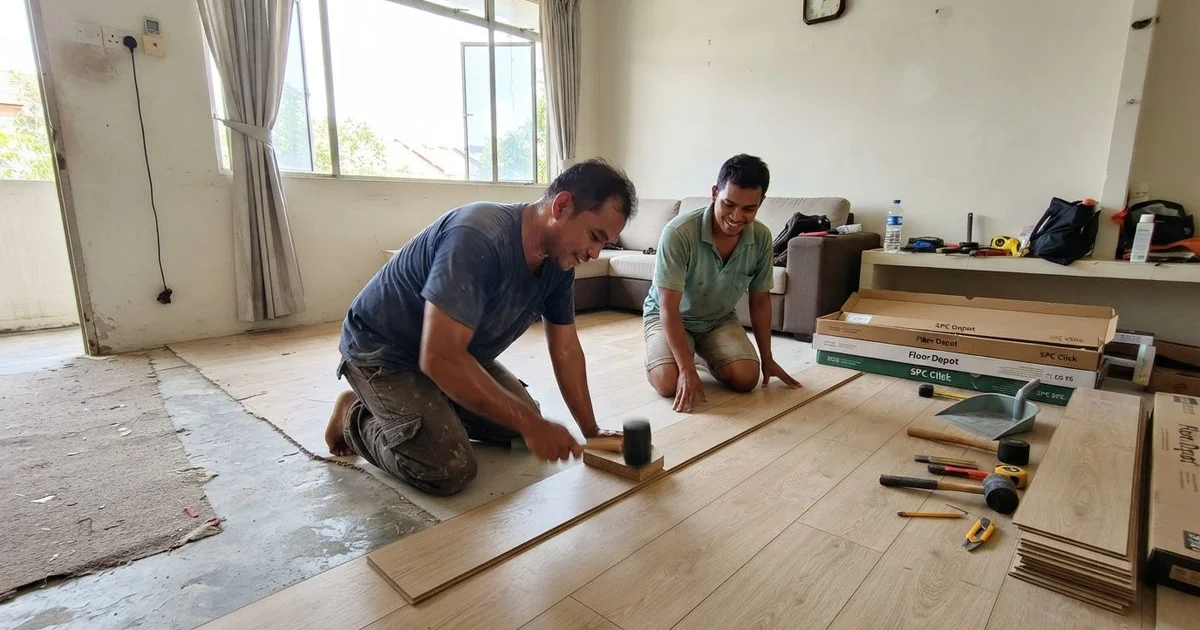
Once you’ve picked a contractor from SPC and vinyl flooring installers in Klang Valley and agreed on a quote, the actual installation follows a fairly predictable sequence. Knowing what should happen at each stage makes it easier to spot when something’s being skipped.
Most homeowners going through this for the first time underestimate how much of the total time goes into prep rather than laying the planks themselves. A floor that looks like it should take an afternoon can end up taking two or three days once levelling, acclimation, and finishing details are factored in, and that’s normal rather than a sign the job is running behind. If you haven’t nailed down a budget yet, our guide on SPC and vinyl flooring cost in Klang Valley breaks down what drives the price before you request quotes.
Before installation day
A proper job starts with a site visit, not a phone estimate. The contractor measures the space, checks the subfloor for level and moisture, and confirms which product and thickness you’ve chosen. This is also when they should flag anything unusual, like an uneven screed or a damp patch near a bathroom wall, that will affect prep.
Material typically needs to acclimate to the room’s temperature and humidity for a day or two before laying, especially for thicker SPC products. A contractor who delivers material and starts laying it the same day is skipping a step that matters more in a humid climate than a dry one.
What happens on the day
- Furniture and old flooring removal. Rooms need to be cleared, and any old flooring being replaced gets taken up and hauled away.
- Subfloor prep. Cracks get filled, high spots ground down, and self-levelling compound applied where the floor isn’t flat enough for planks to sit properly.
- Underlay. A moisture barrier or acoustic underlay goes down where needed, particularly relevant for condo units with strata noise rules.
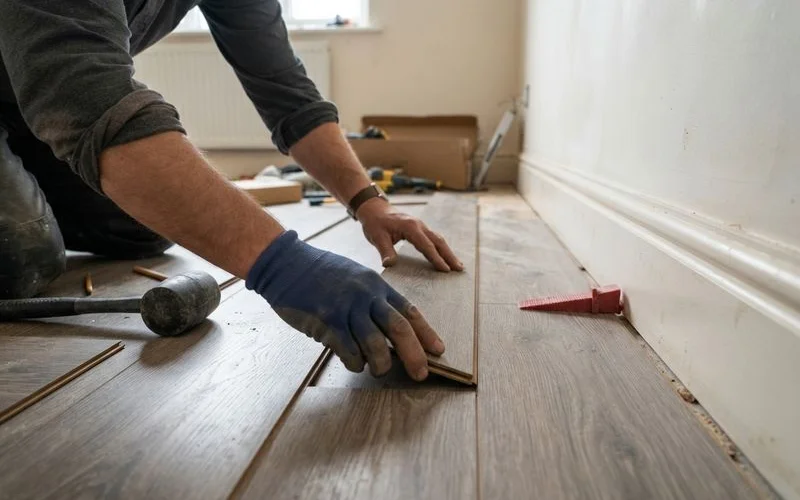
- Laying the planks. Click-lock systems get laid room by room, working from a fixed wall outward, with expansion gaps left at the edges to allow for natural movement.
- Finishing details. Skirting, transition strips at doorways, and stair nosing (if applicable) get fitted last.
A single average-sized room can be done in a day once prep is finished. A full apartment with straightforward subfloor conditions often runs one to three days from start to finish.
What good workmanship looks like
- Seams sit tight with no visible gaps between planks.
- Expansion gaps are consistent around the room’s perimeter, later covered by skirting.
- The floor feels solid underfoot with no hollow-sounding spots, which usually signal a levelling problem underneath.
- Transitions between rooms and materials are clean, without lippage where one floor meets another.
- The site is left reasonably clean at the end of each day, not just at final handover.
Working around an occupied home
Most SPC and vinyl jobs are less disruptive than tiling or timber sanding, since there’s little dust and no wet trades involved once the subfloor is ready. Many households stay in the unit during installation, moving room to room as work progresses, though it helps to plan meals and daily routines around whichever rooms are actively being worked on. Ask your contractor how they sequence a multi-room job so you can keep at least part of the home usable throughout, rather than everything being torn up at once.
The final walkthrough
Before the contractor leaves, walk the whole space with them. Check for gaps, loose transition strips, and any planks that flex or feel unstable. Ask what the warranty covers, both for material defects and for installation issues like lifting seams, and get it in writing rather than a verbal assurance. A contractor confident in their work generally won’t hesitate to put the warranty terms on paper.
If something feels off during the walkthrough, raise it before final payment rather than after, since it’s much easier to get a contractor back for a fix while the job is still open. You can compare how contractors on this directory are rated for workmanship and aftersales on the methodology page if you’re still narrowing down who to hire.
FAQ
- How long does an SPC or vinyl installation take?
- A single room usually wraps in a day. A full unit of 800 to 1,200 square feet with no major subfloor issues often takes one to three days, longer if levelling or old floor removal is needed first.
- Do I need to move out during installation?
- Not usually. Most SPC and vinyl jobs are dust-light compared to tiling or timber sanding, so you can often stay in the unit, though furniture needs to be cleared from each room before work starts there.
- Can SPC flooring be laid directly over old tile?
- Sometimes, if the existing tile is flat and firmly bonded. A contractor should check this on site rather than assume it, since laying over an uneven or loose tile floor causes problems later.
- What happens if the subfloor turns out to be worse than expected?
- A good contractor flags this before continuing and explains what extra prep is needed and what it adds to the price, rather than laying over a problem and hoping it holds.