Vinyl, SPC, timber, tile or carpet: choosing the right flooring type
By Adam · Updated 2026-06-26

Most people searching for a flooring contractor in Klang Valley haven’t settled on a material yet. That’s normal. Vinyl, SPC, timber, tile and carpet each solve a different problem, and the right pick usually depends on the room, not a single “best” material overall.
What actually differs between these materials
The differences that matter day to day are how the floor handles moisture, how much upkeep it needs, what it feels like underfoot, and how much it costs to install and eventually replace.
| Material | Moisture tolerance | Maintenance | Feel underfoot | Typical cost tier |
|---|---|---|---|---|
| SPC / vinyl plank | High | Low, wipe clean | Firm, slightly warmer than tile | Low to mid |
| Laminate | Moderate | Low | Firm | Low to mid |
| Engineered timber | Moderate | Moderate | Warm, natural | Mid to high |
| Solid parquet / timber | Lower, needs acclimation | Higher, periodic refinishing | Warm, natural | High |
| Tile / marble | Very high | Low, but grout needs cleaning | Hard, cool | Mid to high |
| Carpet | Low, traps moisture | Higher, regular vacuuming | Soft | Low to mid |
Where each material tends to fit best
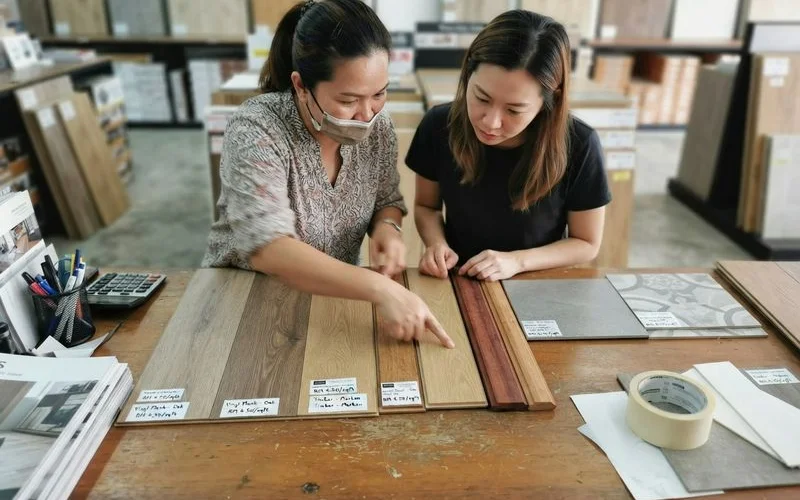
SPC and vinyl plank are the default recommendation for most Klang Valley homes because they shrug off humidity, cost less than timber or stone, and click-lock systems install fast with minimal disruption. They work in kitchens, living areas, and bedrooms alike, which is part of why they’re one of the most requested flooring types in the region. For a closer look at what installation day actually involves, see our guide on what to expect from an SPC or vinyl flooring installation.
Timber and parquet bring a warmth and resale appeal that hard synthetic flooring doesn’t fully replicate. Engineered timber handles Klang Valley’s humidity swings better than solid timber because its layered core resists warping. Solid parquet still works well here, but it needs proper acclimation before laying and a contractor experienced with the local climate.
Tile and marble make sense in wet areas: kitchens, bathrooms, and outdoor-adjacent spaces like balconies. They’re effectively immune to moisture damage, but they’re cold and hard underfoot, and grout lines need periodic cleaning to avoid staining.
Carpet suits bedrooms, home offices, or condo units where comfort underfoot matters more than moisture resistance. It’s less common in living rooms and wet-adjacent spaces in this climate, since it traps humidity and dust more than hard flooring does.
Longevity and how each material ages
It’s worth thinking beyond the first year. SPC and vinyl plank typically hold up well for a decade or more under normal residential traffic, and individual planks can often be swapped out if one gets damaged. Timber and parquet can last decades, sometimes longer than the home’s ownership, but need periodic sanding and refinishing to stay looking good rather than just being wiped down. Tile and marble are close to permanent in terms of the material itself, though grout can discolour over time if it isn’t sealed and cleaned. Carpet has the shortest realistic lifespan of the group, usually needing replacement well before any of the hard flooring options would.
This matters for budgeting since the cheapest option to install isn’t always the cheapest option over ten years. A slightly higher upfront cost on a longer-lasting material can work out ahead if you’re planning to stay in the home for a while, whereas a cheaper, shorter-lived material might make more sense if you’re renovating for a near-term sale.
A simple way to decide
Walk through your unit room by room rather than picking one material for everything:
- Kitchen and bathroom: tile, marble, or a water-resistant SPC product built for wet areas.
- Living and dining areas: SPC, vinyl plank, or engineered timber, depending on your budget and how much warmth you want underfoot.
- Bedrooms: timber, SPC, or carpet, based on comfort preference.
- Balconies and semi-outdoor spaces: tile or a material explicitly rated for outdoor or semi-exposed use.
If budget is tight, mixing materials by room, rather than compromising on one material everywhere, usually gets you a better result for the same total spend.
Getting quotes once you’ve narrowed it down
Once you’ve picked a shortlist of one or two materials, it’s worth getting quotes from a couple of contractors on this directory so you can compare real prices for your space rather than relying on general ranges. Our methodology page explains how listed contractors are scored, which is a useful reference when you’re deciding who to call first.
FAQ
- What's the most practical flooring for a Klang Valley home overall?
- SPC and vinyl plank cover the widest range of rooms well, since they handle humidity better than solid timber and cost less than tile or marble to install. Most homeowners without a strong style preference end up here.
- Is timber flooring impractical in a humid climate?
- Solid timber needs more care in a humid climate than engineered timber or SPC, but plenty of Klang Valley homes run it successfully with proper acclimation and a contractor who understands local conditions.
- Should I mix flooring types across different rooms?
- Many homeowners do: tile or SPC in wet areas like kitchens and bathrooms, timber or carpet in bedrooms and living rooms. Matching the material to how each room is actually used is usually smarter than picking one floor for the whole unit.
- Is carpet a bad idea in a tropical climate?
- Carpet works fine in air-conditioned bedrooms and offices, but it holds humidity and dust more than hard flooring, so it needs more regular cleaning in this climate than it would somewhere drier.