What to expect from a floor sanding and refinishing job
By Adam · Updated 2026-07-03

Sanding and refinishing brings a tired timber or parquet floor back without tearing it out, an approach our guide on new flooring installation versus repair and patching covers in more general terms if you’re still deciding between the two. It’s a more disruptive process than most people expect going in, so knowing the sequence ahead of time makes it easier to plan around the room being out of use.
Once you have a rough sense of the damage level involved, the table below gives a starting figure by floor type, though the real number depends on what the contractor finds once the old finish comes off.
The typical sequence
- Assessment. The contractor checks the floor for loose boards, gaps, water damage, or areas that may need board replacement rather than sanding.
- Sealing off the space. Doorways and vents get taped or covered to limit dust spreading to the rest of the home.
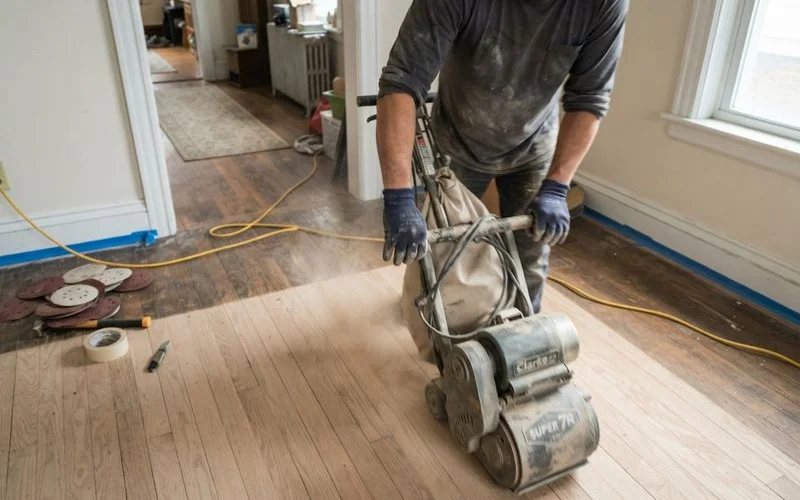
- Drum sanding. The main floor area gets sanded in passes with progressively finer grit, removing the old finish and surface layer.
- Edge sanding. A smaller rotary sander handles corners and edges the drum sander can’t reach.
- Repairs. Any boards found to be damaged, warped, or badly stained get addressed here, before the new finish goes on.
- Staining (if used). An optional step if you’re changing the floor’s colour rather than keeping the natural tone.
- Sealing and finishing. Multiple coats of sealer or polyurethane go on, with drying time required between coats.
| Damage level | What it usually means | Typical price per square metre |
|---|---|---|
| Light | Cosmetic scratches, worn finish | RM22 - RM32 |
| Moderate | Gaps, stains, uneven wear | RM28 - RM42 |
| Heavy | Warped or badly damaged boards | RM35 - RM55 |
What to expect day to day
Dust and noise are part of the process, even with good dust-extraction equipment on modern sanders. Most contractors recommend keeping the room, and ideally adjacent rooms, closed off and clear of furniture and soft furnishings for the duration. If you’re refinishing multiple rooms, ask whether the contractor works room by room so you can keep using part of the home, or needs the whole area cleared at once.
Judging the finished job
A good finish has an even sheen across the whole floor with no patchy or dull spots, no visible sanding marks or swirl patterns when you look across it under angled light, and tight seams where any new boards meet the old ones. Gaps between boards should be consistent, not wider in some spots than others.
Ask your contractor what cleaning products are safe to use on the new finish before you move furniture back. Using the wrong product early can dull or damage a finish that hasn’t fully cured, undoing work that just cost real time and money.
Choosing between oil and polyurethane finishes
The finish product affects both the look and the maintenance routine going forward. Polyurethane sits on top of the wood as a hard, protective film and generally holds up longer under daily traffic, but it needs a full re-sand to fully refresh once it wears through. Oil-based finishes soak into the wood rather than coating it, giving a more natural look and allowing spot touch-ups in worn areas without redoing the whole floor, though they typically need reapplication more often than polyurethane. Neither is objectively better, it depends on how much upkeep you’re willing to do and which look you prefer.
Before you commit
Get a written scope that specifies the sanding grit progression, the number of coats, and the specific sealer or finish product, not just “sand and seal.” This makes it much easier to hold a contractor to what was agreed if the result doesn’t match expectations. If you haven’t settled on timber as your material yet, our guide on choosing the right flooring type compares it against SPC, tile and carpet for upkeep and durability. You can browse floor renovation and refinishing contractors on this directory and see how they’re rated for workmanship and communication on our methodology page.
FAQ
- How long is a room unusable during sanding and refinishing?
- A single room usually takes two to four days from sanding through final coat and drying time. A full unit can take a week or more, depending on the number of rooms and how many coats the finish needs.
- Is the dust from sanding a real problem?
- Yes, even with dust-extraction equipment on the sander. Expect some fine dust beyond the immediate work area, and ask your contractor how they seal off the space and protect furnishings elsewhere in the home.
- Can I walk on the floor right after the final coat?
- No. Sealers and finishes need curing time before normal foot traffic, and longer again before rugs or furniture go back. Your contractor should tell you the exact wait time for the specific product used.
- What if damage is found once the old finish is sanded off?
- A good contractor stops and tells you rather than sanding over it. Warped boards, deep water staining, or rot sometimes only become visible once the surface finish is removed, and it changes the scope and price.