Epoxy flooring fumes and indoor air safety: what to know before a job
By Adam · Updated 2026-07-05
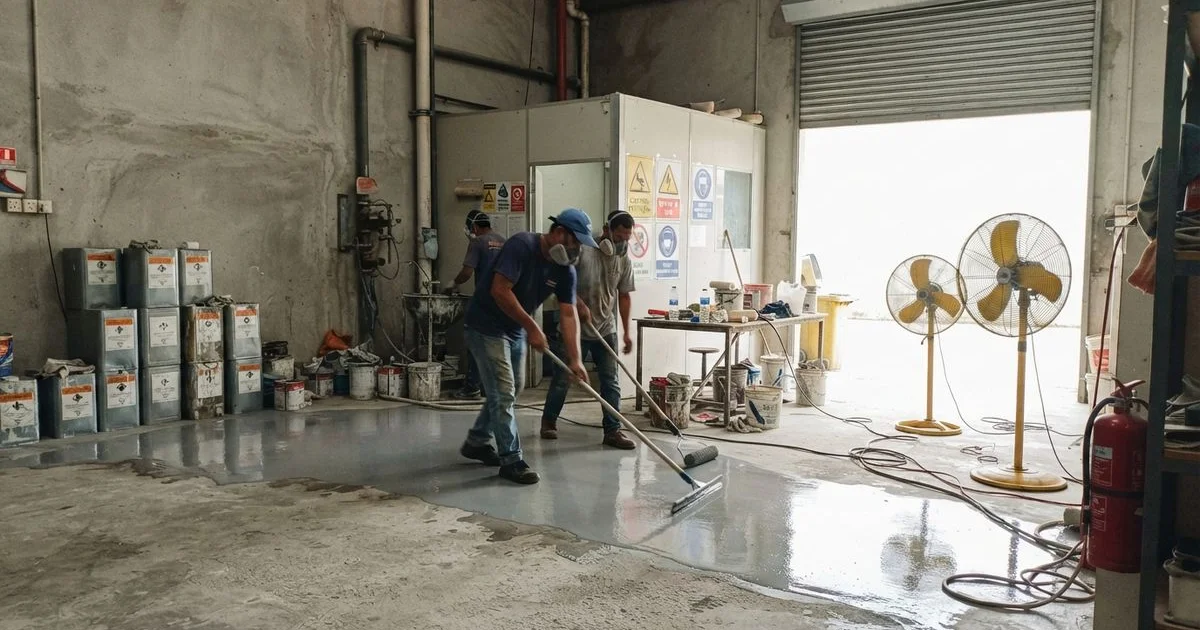
Epoxy flooring involves applying a liquid resin that off-gasses fumes during application and while it cures. This is a normal part of the process, not a sign something’s gone wrong, but it does mean ventilation and timing deserve real attention before work starts, especially for larger commercial or industrial jobs. If you’re still comparing quotes, our guide on epoxy flooring cost in Klang Valley breaks down what drives the price by coating system.
This guide is general information to help you ask the right questions before a job. It isn’t medical advice, and anyone with respiratory conditions or specific health concerns should speak to a doctor about their own exposure risk.
Why ventilation matters here
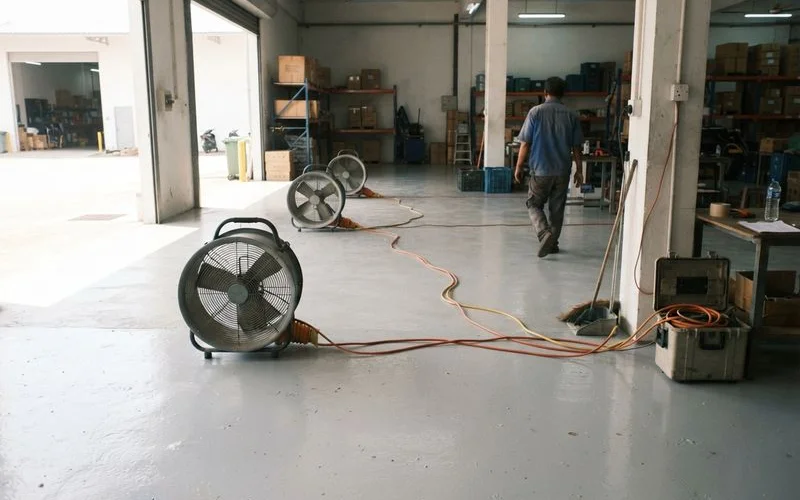
Epoxy resins and their hardeners release volatile organic compounds (VOCs) as they cure. In an enclosed factory or basement car park with limited airflow, these can build up to levels that cause headaches, dizziness, or respiratory irritation with prolonged exposure. Good epoxy and industrial flooring contractors plan for this before the first coat goes down, not partway through the job.
The scale of the space changes the calculation too. A small showroom floor cures and airs out faster than a full warehouse or a multi-level car park, simply because there’s more surface area off-gassing into a larger but often less actively ventilated volume of air. Ask your contractor how the size and layout of your specific site changes their ventilation plan rather than assuming a standard timeline applies everywhere.
What a safety-conscious contractor does
- Plans ventilation before starting. Fans, open access points, or mechanical ventilation systems should be arranged ahead of time, particularly for enclosed spaces like basements or windowless units.
- Schedules around occupancy. Work is often planned for periods when the space is unoccupied, especially for offices, retail units, or homes where people can’t easily relocate during the job.
- Uses appropriate personal protective equipment. Respirators, gloves, and eye protection for the crew applying the coating are standard, not optional extras.
- Gives a clear timeline for re-entry. A contractor should tell you specifically how long to keep the space closed off after each coat, not just “it’ll be fine tomorrow.”
- Discusses low-VOC options where relevant. Not every job needs this, but it’s worth asking about for spaces with limited ventilation or sensitive occupants nearby.
Who’s most affected and why it matters
Anyone with asthma, chemical sensitivities, or other respiratory conditions should treat epoxy application windows with extra caution, since even well-ventilated spaces still carry some fume exposure during and shortly after application. This is also relevant for shared buildings: an epoxy job in one shop lot or unit can affect air quality in adjacent spaces if ventilation isn’t managed carefully, so it’s worth flagging to neighbouring tenants or, for a home garage, to household members whose bedrooms sit close by.
Pets are worth planning around too. Keep animals out of the treated area and away from adjacent rooms until your contractor confirms the space is fully cured, since a pet’s smaller size and different breathing rate can make them more sensitive to lingering fumes than an adult would be.
Questions worth asking before you book
Ask how the contractor plans to ventilate the space during and after application, whether the crew wears respiratory protection, and how long you or your staff need to stay out of the area once each coat goes on. If a contractor brushes off these questions or gives a vague answer, that’s worth weighing against the rest of their quote.
For commercial and industrial sites that can’t fully shut down, ask whether the job can be sequenced by section, so part of the facility stays usable while another section cures and airs out.
After the job
Even once a floor looks and feels dry, full curing can take longer than the surface suggests, and some off-gassing continues during that period at a lower level. Follow your contractor’s specific guidance on when normal occupancy and heavy use, like forklift traffic, can resume rather than judging by touch alone.
You can compare how contractors on this directory are reviewed for site safety practices and communication on our methodology page before you book a job.
FAQ
- Are epoxy flooring fumes dangerous?
- Epoxy resins release fumes during application and while curing, and prolonged exposure in a poorly ventilated space isn't something to take lightly. Good ventilation, curing time, and keeping people away from the work area during application manage most of the risk.
- How long until the fumes clear after an epoxy floor is done?
- It depends on the product and the ventilation available, but most contractors recommend keeping the space unoccupied for at least a day or two after the final coat, longer for larger commercial areas or low-VOC alternatives if used.
- Can I stay in my home while a small epoxy job, like a garage floor, is done?
- Many homeowners do for a garage or utility area, provided it's separated from living space and ventilated. Ask your contractor for a specific recommendation based on your layout rather than assuming it's fine.
- Do low-VOC epoxy products exist?
- Yes, some systems are formulated to reduce volatile organic compound emissions. Ask your contractor whether this is available and whether it fits your project's budget and performance needs.