Epoxy flooring cost in Klang Valley: what affects the price per square foot
By Adam · Updated 2026-06-24
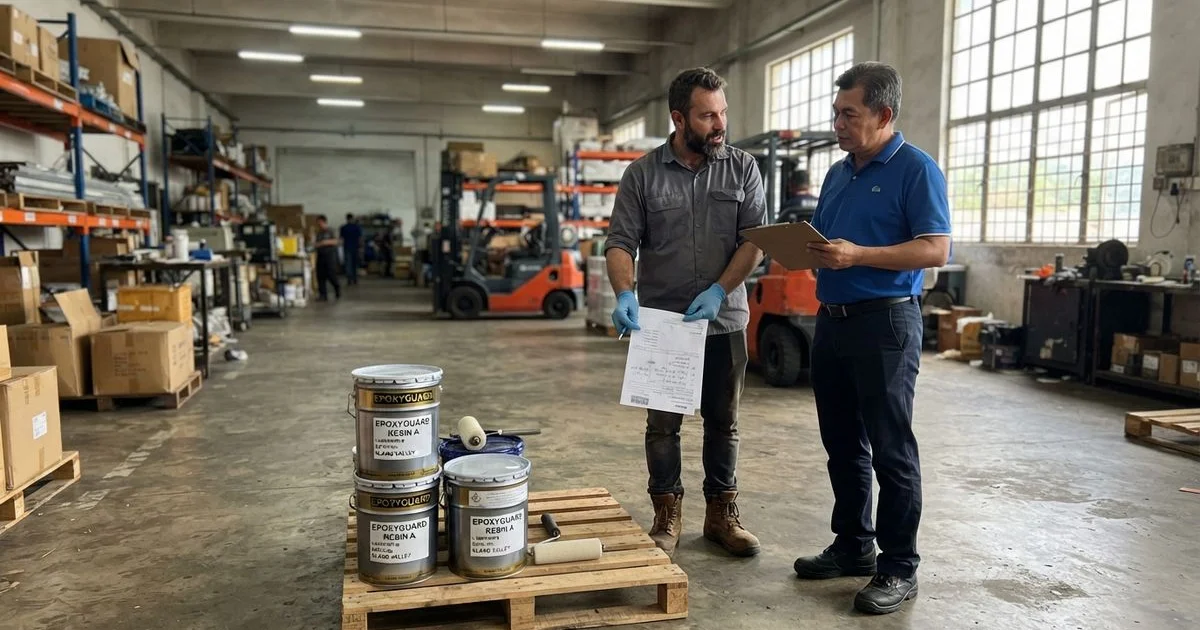
Epoxy flooring pricing confuses a lot of first-time buyers because the same word, “epoxy,” covers systems that range from a thin paint-on coating to a thick, self-levelling, chemical-resistant floor built for a factory running forklifts around the clock. Getting quotes that actually compare requires knowing which system each contractor is pricing.
If you’re weighing your options, it’s worth looking at epoxy and industrial flooring contractors in the area early, since the range of systems they offer varies more than most buyers expect.
The three cost drivers
Epoxy pricing in Klang Valley comes down to three things: which coating system you choose, how much prep the existing slab needs, and the total area being coated (larger jobs bring the per-square-metre rate down).
| Coating system | Typical use case | Rough price per square metre |
|---|---|---|
| Basic single-coat paint | Storerooms, light-duty showroom floors | RM16 - RM22 |
| Standard self-levelling epoxy | Retail units, workshops, moderate traffic | RM30 - RM45 |
| Heavy-duty / anti-slip industrial | Factories, warehouses, forklift traffic | RM55 - RM75 |
These figures cover material and labour for a typical Klang Valley commercial or industrial floor. Surface prep, described below, sits on top of these numbers.
What surface prep adds to the price
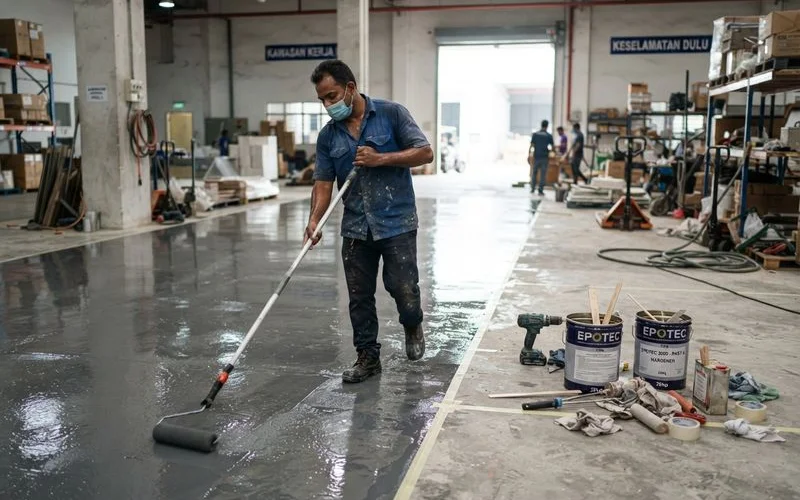
The condition of the concrete slab underneath matters as much as the coating itself. A floor that’s clean and smooth costs less to prep than one that needs diamond grinding or crack and joint repair before the epoxy goes on. As a rough guide, expect prep alone to add somewhere between 15 and 40 percent to the base coating cost, depending on how much grinding or patching the slab needs. Skipping proper prep is one of the most common reasons an epoxy floor bubbles or peels within the first year, so a contractor quoting noticeably less than everyone else is worth asking about directly. Application also means living with strong fumes for a few days, so if the space is attached to an occupied home or office, the guide on epoxy flooring fumes and indoor air safety covers what to expect and how to plan ventilation around it.
Questions worth asking before you sign
- Did they test the concrete for moisture before quoting? Moisture trapped under a coating is a common cause of bubbling and delamination later.
- What prep method are they using, and why? Diamond grinding and shot-blasting suit different slab conditions. A contractor should be able to explain the choice for your specific floor.
- What’s the warranty, in writing? Verbal promises about durability are not the same as a written warranty term.
- Can they show photos of a similar-scale job? A contractor who has only done small showroom floors may not be the right fit for a full factory floor, and vice versa.
- Can your facility stay partly operational during the work? Epoxy needs curing time between coats, so ask how they plan to sequence the job if you can’t shut the whole site down.
How area size affects the rate
Larger jobs generally bring the per-square-metre price down, since site setup, equipment mobilisation, and crew travel costs spread across more floor area. A small showroom under 100 square metres will typically pay a higher rate than a full warehouse floor running into the thousands of square metres, even for the same coating system. If your project sits at the smaller end, it’s worth asking whether combining phases or scheduling the job alongside a neighbouring unit’s work could bring the rate down.
Is it worth paying more for a heavier system
Matching the system to the actual load matters more than picking the cheapest quote. A basic paint system under regular forklift traffic will wear through fast and need redoing sooner, which usually costs more over a few years than paying for the right system up front. If you’re not sure which tier your space needs, ask a couple of contractors to explain their reasoning, not just hand you a number, and compare their logic rather than only the bottom line.
For facilities that can’t shut down for a normal work week, ask early whether after-hours or weekend scheduling is available, since that can change both the price and the timeline. You can see how contractors on this directory are scored for workmanship and communication on the methodology page before narrowing your shortlist.
FAQ
- What is the cheapest type of epoxy flooring?
- A basic single-coat epoxy paint system is the lowest-cost option, suited to light-duty areas like a storeroom or showroom floor. It won't hold up the same way a heavy-duty system does under forklift traffic.
- Why do epoxy quotes vary so much between contractors?
- The coating system proposed and how much surface prep the slab needs are the two biggest swing factors. A quote based on minimal prep is not comparable to one that includes diamond grinding and crack repair.
- Does epoxy flooring cost more than tiles for a factory floor?
- For large continuous areas like a factory or warehouse, epoxy is usually cheaper per square metre than tiling and faster to install, which is part of why industrial and commercial sites default to it.
- How long before an epoxy floor needs to be redone?
- A well-installed system under regular foot and light vehicle traffic typically holds up for several years before it needs a fresh topcoat, longer in lower-traffic areas. Heavy forklift or chemical exposure shortens that window.