Carpet flooring, dust and allergies: what Klang Valley homeowners should know
By Adam · Updated 2026-07-12

This guide covers general considerations about carpet, dust and allergens. It isn’t medical advice, and anyone with diagnosed allergies, asthma, or a respiratory condition should speak to a doctor about flooring choices for their specific situation.
Carpet brings genuine comfort underfoot and sound-dampening that hard flooring doesn’t match, which is part of why it remains a common choice for bedrooms and home offices across Klang Valley. The trade-off worth understanding upfront is how it interacts with dust, dander, and humidity compared to vinyl, tile, or timber.
Why carpet gets flagged for allergy concerns
Carpet fibres physically trap dust, pet dander, pollen, and other particles rather than letting them settle where they can be wiped or swept away. In a humid climate, this matters more than it would somewhere drier, since trapped moisture in carpet fibres and underlay can support dust mites, which are one of the most common household allergy triggers. None of this means carpet is unsafe, it just means it needs a different cleaning routine than hard flooring does.
This is also why the conversation around carpet tends to get more attention here than in drier climates. A carpet that performs fine in a temperate country can behave differently once it’s living through Klang Valley’s year-round humidity and occasional stretches of heavy rain, particularly in ground-floor units or rooms with less consistent air conditioning.
Managing the risk if you want to keep carpet
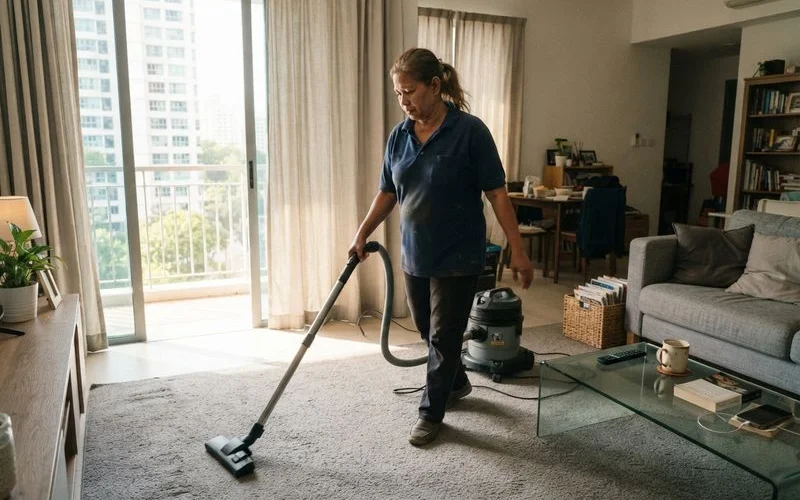
- Vacuum with a HEPA-filter vacuum regularly, not just when the carpet looks visibly dusty.
- Get a professional deep clean periodically, since regular vacuuming doesn’t fully remove what’s trapped deeper in the pile.
- Choose low-pile carpet or carpet tiles over thick, high-pile styles, since there’s less depth for particles and moisture to settle into.
- Keep humidity in check with air conditioning or a dehumidifier in carpeted rooms, particularly during the wetter months.
- Limit carpet to lower-risk rooms, like bedrooms, rather than high-traffic or wet-adjacent areas where hard flooring is more practical anyway.
Comparing carpet against alternatives
| Consideration | Carpet | Hard flooring (SPC, tile, timber) |
|---|---|---|
| Dust and allergen retention | Higher | Lower |
| Comfort underfoot | Higher | Lower to moderate |
| Sound dampening | Higher | Lower |
| Cleaning effort | Higher | Lower |
| Performance in humidity | Needs more attention | Generally more tolerant |
What to ask a carpet supplier or installer
A good carpet contractor should be able to speak to more than just colour and pattern. Ask what underlay they recommend for a humid, air-conditioned unit, since the underlay traps as much dust and moisture as the carpet itself and is often overlooked in the buying decision. Ask whether the carpet has any certification for low chemical emissions, since some synthetic carpets off-gas volatile compounds when new, which can be an added irritant for sensitive households in the first weeks after installation. It’s also worth asking how the seams are finished, since poorly sealed seams can trap extra dust along the joins between carpet sections.
For condo and apartment units, check whether the carpet and underlay combination meets your building’s acoustic requirements if one applies, since this is a separate consideration from allergen control but often gets bundled into the same purchase decision.
Where carpet still makes sense
For bedrooms, home offices, and spaces where comfort and quiet matter more than moisture resistance, carpet remains a reasonable choice, including for many households with mild allergy concerns, as long as a proper cleaning routine is in place. It’s the combination of neglect and humidity, not carpet itself, that tends to cause problems. If you’re weighing carpet against a harder surface for a household with young children or elderly parents, our guide on slip-resistant flooring for homes with kids and elderly parents covers the safety side of that decision.
If you’re weighing carpet against other materials, browsing carpet flooring contractors in the area is a good way to see what underlay and product options are available for your specific rooms. You can also check how contractors on this directory are reviewed for product knowledge on our methodology page.
FAQ
- Does carpet really trap more dust than hard flooring?
- Yes, carpet fibres hold dust, pet dander, and other particles that would otherwise settle on a hard surface and get wiped or swept away. This is the main reason carpet gets flagged for households with allergy concerns.
- Is carpet a bad idea in a humid climate like Klang Valley?
- It's more of a maintenance consideration than a dealbreaker. Carpet in humid conditions can hold moisture and support dust mites more than it would in a drier climate, so regular cleaning and good ventilation matter more here than they would elsewhere.
- Which carpet type is easiest to keep allergen-free?
- Low-pile carpet or carpet tiles are generally easier to clean thoroughly than thick, high-pile carpet, since there's less depth for dust and dander to settle into.
- Should I avoid carpet entirely if someone in my home has allergies or asthma?
- Not necessarily. Many households manage this with regular deep cleaning, good ventilation, and carpet limited to lower-risk rooms like bedrooms rather than the whole home. Anyone with a diagnosed condition should get guidance from their doctor on what's appropriate for their specific situation.