Planning an office or retail flooring fit-out without shutting down
By Adam · Updated 2026-07-10
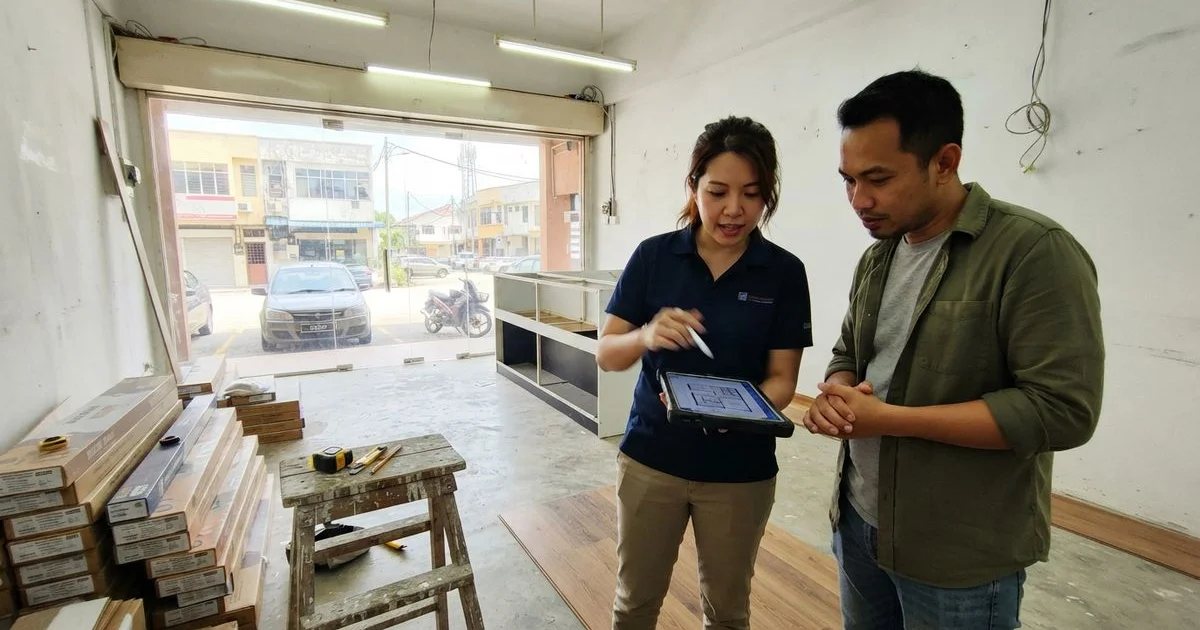
Flooring a shop lot, office floor, or retail unit runs on a different clock than a home renovation. The material choices matter, but so does keeping the business running, or minimising the downtime, while the work happens.
Facilities managers and business owners who’ve been through this once tend to plan the next job very differently: they ask about scheduling and sequencing before they ask about material samples. That order of priorities is worth adopting even for a first-time commercial fit-out, since a beautiful floor installed on a timeline that disrupted trading for two extra weeks isn’t the win it looks like on paper.
What makes a commercial job different
Unlike a home renovation where the space simply sits empty during work, a commercial fit-out usually has to work around business hours, other trades on site, and sometimes a hard deadline tied to a lease start date or opening day. Commercial and office flooring contractors who handle this regularly plan for these constraints from the first site visit, not as an afterthought.
What a well-planned fit-out looks like
- A sequencing plan, not just a start date. For larger spaces, work is often broken into sections so part of the space can reopen while another section is still being finished.
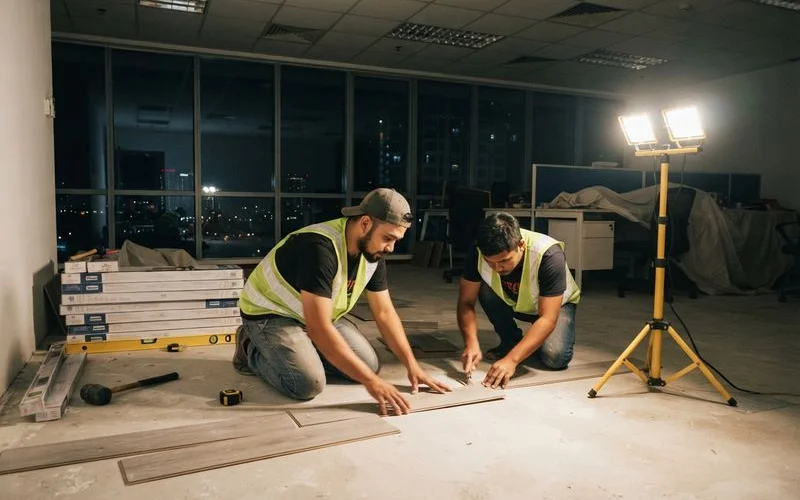
- After-hours or weekend scheduling where needed. Retail and office clients usually need the space back in use quickly, and many commercial flooring contractors offer overnight or weekend work specifically for this reason, though it’s worth confirming since not every contractor does.
- Coordination with other trades. If your fit-out involves electricians, partition contractors, or other trades, your flooring contractor should be able to slot into that timeline rather than working in isolation.
- A clear plan for existing furniture and equipment. Desks, shelving, and fixtures need to be moved or protected, and a good contractor confirms this responsibility upfront rather than assuming you’ll handle it.
Materials commonly used in commercial spaces
| Finish grade | Typical use | Rough price per square metre |
|---|---|---|
| Economy (vinyl / carpet tile) | Back-of-house, storage, budget fit-outs | RM55 - RM75 |
| Standard (SPC / porcelain tile) | General office and retail floors | RM90 - RM120 |
| Premium (timber / stone) | Client-facing areas, flagship retail | RM160 - RM220 |
Urgent timelines or after-hours-only scheduling typically add a premium of roughly 15 to 35 percent above a normal-schedule quote, so it’s worth confirming which timeline you’re being quoted for. Many fit-outs also mix these grades across zones inside a single project, workstation carpet tile, SPC in meeting rooms, epoxy in a server room, tile in the washrooms, and our office renovation flooring package page covers how that kind of multi-material job typically gets coordinated as one booking. If your premium areas specify timber or stone, our guide on best flooring choices for Klang Valley’s humidity and monsoon season is worth a look too, since those materials need different handling in this climate.
How site logistics affect the timeline
Beyond the flooring itself, commercial buildings often add their own logistics layer: loading bay booking windows, lift access restricted to certain hours, and building management requiring advance notice before any noisy or dusty work. A contractor unfamiliar with a specific building may lose a day just working through these requirements, which is one reason it helps to ask whether they’ve worked in your building, or at least a similar one, before.
Waste removal is another detail that gets missed in early planning. Ripping out old carpet tile or vinyl from a large commercial floor generates more debris than most people expect, and building management often has specific rules about disposal routes and timing. Confirm this is included in the quote rather than assuming it’s a given.
Questions to ask before booking
Ask specifically how the contractor plans to sequence the job around your business hours, whether they’ve handled a similarly sized commercial space before, and how they coordinate with other trades if your fit-out involves more than flooring. A contractor who answers these clearly, with a real plan rather than a general assurance, is usually the safer choice for a job where downtime has a real cost attached.
You can browse contractors on this directory and check how they’re rated for reliability and communication on our methodology page before requesting quotes for your project.
FAQ
- Can flooring work happen while our office stays open?
- Sometimes, if the job is split by section or done after hours, but a full re-flooring of an open-plan space usually needs the area closed. Ask your contractor to walk through exactly how they'd sequence your specific layout.
- How far in advance should we book a commercial flooring job?
- Larger jobs with after-hours or weekend scheduling requirements often need more lead time than a straightforward residential job, since the contractor has to plan crew availability around your business hours. Ask early rather than assuming a quick turnaround.
- What flooring types are most common for offices and retail units?
- SPC, carpet tile, and epoxy show up most often, chosen for durability under continuous foot traffic and, for epoxy in particular, ease of maintenance in retail or light-industrial settings.
- Does after-hours work cost more?
- Usually yes, since it requires crew availability outside normal working hours. Ask for the after-hours or weekend rate as a separate line item so you can compare it against the standard-schedule price.